

The island that
won’t let you go.
More than 25 trips since 1996, our own photos, our own routes. This is what we’ve seen for ourselves on Fuerteventura and checked for you.


We’re Frank and Birgit. I’ve been coming to Fuerteventura since 1996, Birgit since 2005 – more than 25 trips between us. One day we want to live on the island, starting with the winters. Our rule for this site: help first, recommendations second, selling last.
We’re from Germany and write in German first. The English pages are translated and checked by us, with prices in euros and distances in kilometres, as you’ll find them on the island.
New here? Start with these three
One place we know inside out, the guide most people need first, and the dish you’ll meet on every table.

Costa Calma
The quiet resort in the south: kilometres of beach, plenty of greenery and the Sotavento lagoon on the doorstep.
Car hire on Fuerteventura: which car for what – my 30 years of experience
Small car, SUV or Jeep? Which car for what, where the dirt tracks begin and how pick-up at the airport works – from more than 25 trips since 1996.
Papas Arrugadas – Canarian wrinkled potatoes boiled in salted water
Small potatoes, coarse sea salt, one pan. Once you’ve made them yourself, you understand why Canarians need nothing else.Where do you want to go?
From a fishing village in the west to a surf spot in the north: for each place, what we’ve found there and who it suits.
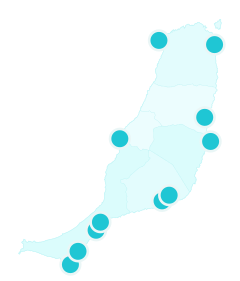 Beach map
All beaches on the map
The island map with only the beaches: from the north down to Jandía, at a glance. Open the beach map → Costa Calma
The quiet resort in the south: kilometres of beach, plenty of greenery and the Sotavento lagoon on the doorstep.
Ajuy
Small fishing village on the west coast: a black beach, wild surf and the Ajuy caves in ancient rock.
Antigua
A quiet village in the island’s interior: white church, lovely square, cheese museum with windmill and a cactus garden that has grown huge.
Betancuria
The old capital in the mountains: white houses, palm trees, a church full of history and superb viewpoints.
Caleta de Fuste
A sheltered bay for swimming, a small harbour and plenty going on – the family resort on the east coast, just ten minutes from the airport.
Corralejo
Lively in the north: the dunes nature park, a harbour with ferries to Lobos and Lanzarote, the old town and plenty going on in the evenings.
El Cotillo
Fishing village in the north-west: lagoons for swimming, wild surf beaches, an old watchtower and sunsets over the Atlantic.
Gran Tarajal
A small Canarian town, not a resort: dark town beach, long promenade, harbour and genuine everyday island life.
Lajares
The sleepy surf village in the north: cafés, crafts and the Calderón Hondo volcano, with El Cotillo right next door.
Las Playitas
White fishing village on the east coast: a small harbour, a seafront promenade, a sports resort next door and the Entallada lighthouse.
Morro Jable and Jandía
Promenade, fishing harbour and a beach that runs for kilometres: the lively town at the end of the island and the gateway to Cofete.
Puerto del Rosario
The island’s capital: a harbour promenade, sculptures in every street and real everyday Canarian life, ten minutes from the airport.Before you fly: what you need to know
Car hire, swimming, arriving at the airport: the big questions about your trip, checked and answered from our own experience.
Car hire on Fuerteventura: which car for what – my 30 years of experience
Small car, SUV or Jeep? Which car for what, where the dirt tracks begin and how pick-up at the airport works – from more than 25 trips since 1996.
Arriving at Fuerteventura airport: luggage, hire car, bus and your first two hours
From the baggage belt to your first drive: where to find your hire car, which bus goes where, what a taxi costs and what to do if your room isn’t ready yet.
Best time to visit Fuerteventura: climate, sea, wind and Calima month by month
How warm is Fuerteventura, and when? Official climate figures for every month, sea, wind, rain and Calima, plus 30 years of our own experience.
Fuerteventura without a hire car: buses, taxis, boats and when you still need a car
When you’ll manage fine without a car, how the island bus works, what taxis, boats and e-scooters are good for, and where there’s no getting round a hire car.
Oasis Wildlife Fuerteventura: a full day among giraffes, birds of prey and cacti
Giraffes at eye level, birds of prey in free flight, a huge cactus garden: how to plan your day at Oasis Wildlife, with map, shows and getting there.
Swimming on Fuerteventura: flags, currents and where it’s safe to go in
What beach flags mean in the Canaries, why you don’t swim on the west coast and what helps if you’re caught in a current – based on 30 years of visiting Fuerteventura, with sources.This is how Fuerteventura tastes
Canarian classics the way they’re served on the island, and next to them my version for cooking at home.

Papas Arrugadas – Canarian wrinkled potatoes boiled in salted water
Small potatoes, coarse sea salt, one pan. Once you’ve made them yourself, you understand why Canarians need nothing else.
Albóndigas in tomato sauce – Spanish meatballs straight from the pan
Well browned, braised slowly in a tomato sauce with roasted peppers and served straight from the pan. With plenty of garlic.
Gambas al Ajillo — prawns in hot garlic oil
Sizzling prawns, golden garlic, chilli – and the oil is still bubbling at the table. Ready in 30 minutes, as long as you avoid two mistakes.
Mojo Rojo – the fiery red soul of the Canaries
Hot, smoky, deep red: Mojo Rojo belongs to Canarian cooking the way salt belongs to the sea. Without it, Papas Arrugadas are just potatoes.
Mojo Verde – the green sauce of the Canary Islands
A green sauce that goes with everything on Fuerteventura: Mojo Verde with coriander, garlic and a splash of vinegar. Ready in ten minutes.
Pescado en Escabeche – fish marinated in spiced vinegar
Fried fish left for a day in vinegar, oil, onions and spices. We eat it lukewarm as a starter or tapa, with bread or papas (potatoes) on the side.- Potaje de Lentejas – Canarian lentil stewCanarian lentil stew with corn on the cob, pumpkin and sweet potato. Proper home cooking, the kind you can still find away from the tourist resorts.
- Potaje de Verduras – Canarian vegetable stew with corn and pumpkinCabbage, pumpkin, corn, beans and potatoes in one pot. At ours, potaje goes straight into the bowl, with a bit of bread at most.
- Puchero Canario – Canarian meat and vegetable stewBeef, chicken, chickpeas, pumpkin, sweet potato and corn in one big pot. We have the broth first as a soup, then the meat and vegetables.
- Ropa Vieja – the stew made from yesterday’s leftoversRopa Vieja means “old clothes” – a Canarian stew of chickpeas, beef and vegetables. Honest, filling, no frills.